How should glasses fit your face?
Lifestyle

Audio By Carbonatix
11:00 AM on Monday, December 29
By Tom Determan, O.D. for Eyemart Express, Stacker

How should glasses fit your face?
Are your glasses so big that they have their own ZIP code? You’re not alone. Many people pick glasses without considering their face shape. Glasses should fit your facial features and proportions for maximum comfort and aesthetic quality.
Ill-fitting glasses cause sliding and pinching, which can make daily activities extra stressful. This guide from Eyemart Express will tell you exactly how to find glasses for your face shape and what to do if your glasses don’t fit.
What Factors Determine the Fit of Your Glasses?
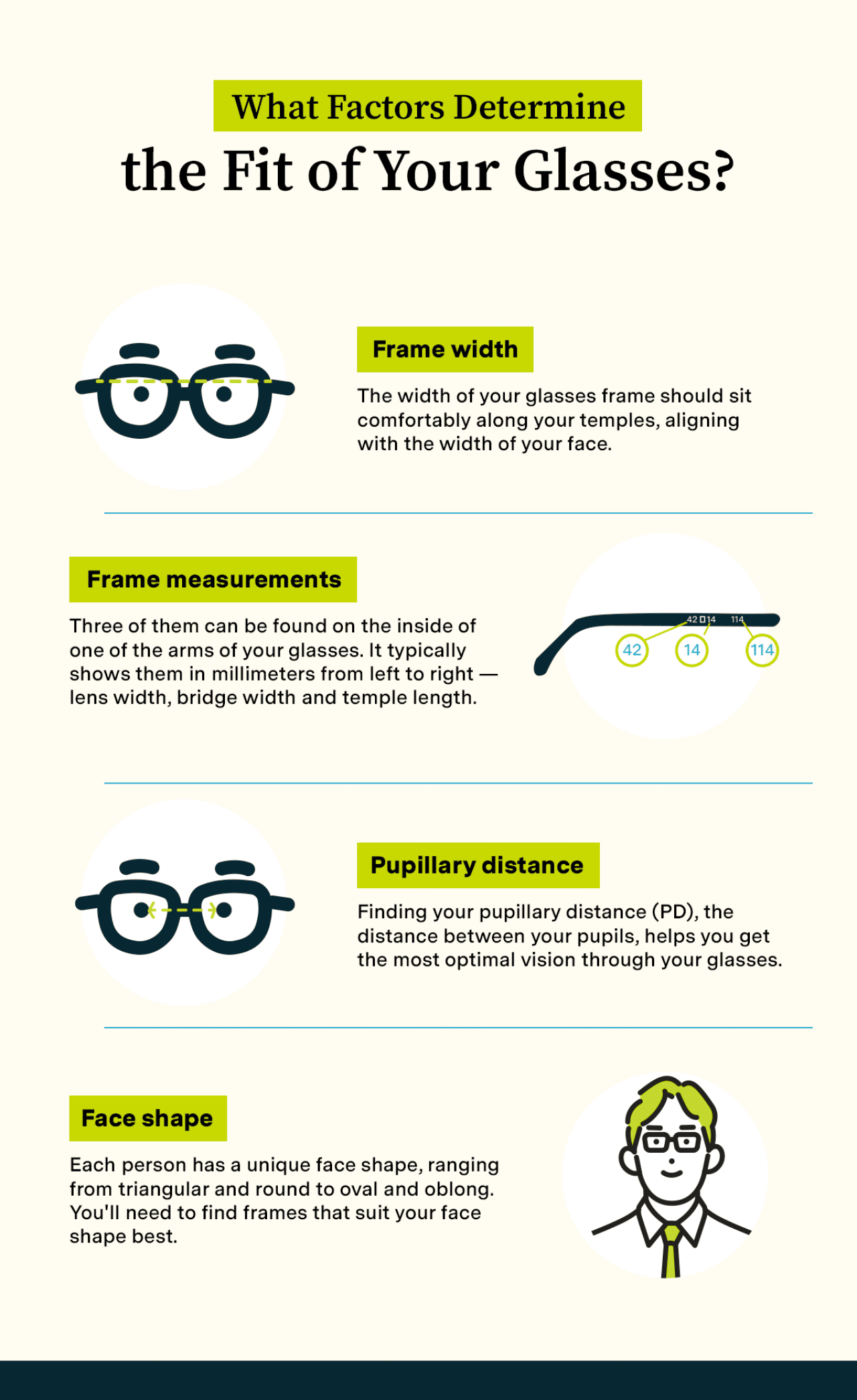
Factors such as frame width, pupillary distance, frame measurements and face shape all determine how your glasses fit your face — it’s not quite as simple as two lenses in a frame. Finding the right fit of glasses means assessing the dimensions of your face and head to evaluate where the frame will sit and how it will look.
Once you’ve sorted out all these details, finding a comfortable-fitting pair of glasses becomes easier. Here’s a breakdown of these factors to help you get started.
- Frame width: The width of your glasses frame should sit comfortably along your temples, aligning with the width of your face. If they extend too wide past the side of your head, they won’t center your eyes to the middle of the lenses. The frames are also more likely to fall off your face when you look down or walk too fast.
- Frame measurements: There are five frame measurements used to find the perfect fit for your head and face. Three of them can be found on the inside of one of the arms of your glasses. It typically shows them in millimeters from left to right — lens width, bridge width and temple length. Including the lens height and frame width in these measurements will give you a better guideline for finding a comfortable fit.
- Pupillary distance: Finding your pupillary distance (PD), the distance between your pupils, can come in handy when trying to ensure your eyes are at the center of your lenses. It also helps you get the most optimal vision through your glasses, helping you transition between near vision and distant zones more effectively.
- Face shape: No two faces are the same. Each person has a unique face shape, ranging from triangular and round to oval and oblong. That means hand-me-downs aren’t going to cut it. You’ll need to find frames that suit your face shape best.
How to Find the Right Glasses for Your Face Shape
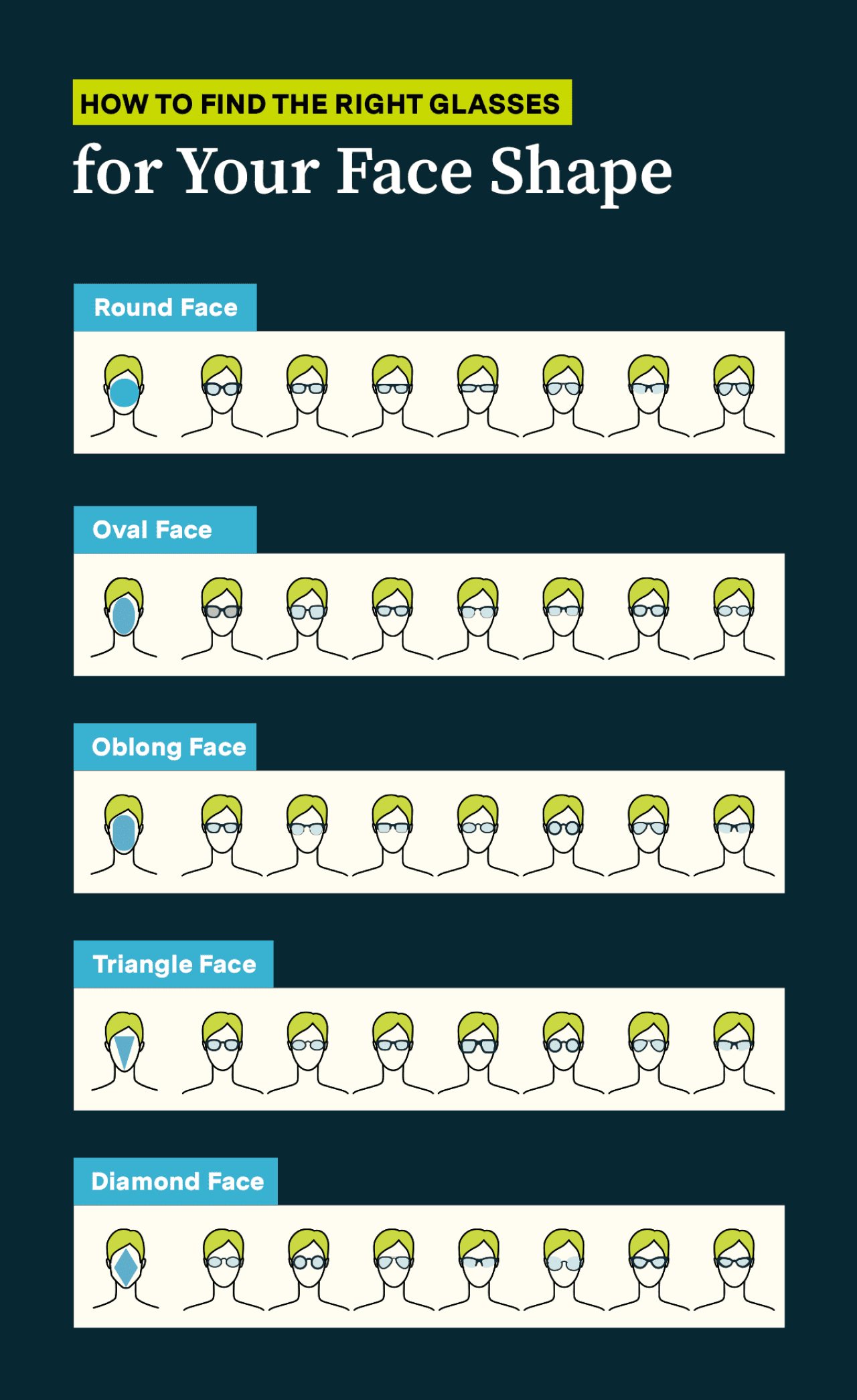
Finding the right glasses for your face shape can help you look and feel your best. Face shape is one of the most important factors to consider when purchasing glasses because you want them to complement your features and sit comfortably.
Glasses shapes usually come in geometric, aviator, round, square, browline, oval and cat-eye styles. The easiest way to find the right glasses for your face shape is to find frames that complement your face shape.
A quick tip to find your face shape is to tie your hair back, stand in front of a mirror and trace your face onto the mirror with a marker. This should provide a visual representation of your face shape. Here’s a breakdown of the frame styles that generally suit different face shapes.
Round Face
Round faces have a similar width and length and typically no angles, giving them less definition compared to other face shapes. If you have a round face, look for frames that make your face appear longer and thinner, bringing harmony to your features and complementing your rounded face shape.
Frames with hinges above the eye level can help elongate the face, making a rounded profile look thinner and longer. If you want to exaggerate the roundness of your face, rounded frames can bring out its natural shape more. It’s best to avoid square styles for rounded faces, as they put rounded faces and features out of balance and may overly exaggerate the lack of dimension.
Oval Face
Oval faces have a chin that is slightly narrower than the forehead, with cheekbones that are typically high and add definition to the face. Many different spectacle types suit this face shape because it has more definition and balanced proportions. The main aim is to find glasses that maintain the face’s natural harmony.
If you have an oval face, choose frames that are wider than the broadest part of the face, with a size and thickness proportional to the rest of your face. To avoid upsetting the harmony and balance of your face, avoid glasses with low-seating temples, which can bring your features down.
Oblong Face
Oblong faces are longer than they are wide, so you need to select a frame that’s deeper than it is wide to bring more balance to your features. If you have this face shape, you can easily pull off bold frames like geometric shapes with plenty of vertical dimensions.
Glasses that make the face appear shorter or wider work well for oblong face types. Analyze your face to see if you need more length or width to create balance. If you want to add width to your face, look for contrasting temples. Those looking to shorten the face would appreciate frames with strong horizontal lines and low triangle shapes.
Triangle Face
Triangle face shapes can have a wide forehead and cheekbones with a narrow chin or a narrow forehead that widens toward the chin. If you have this face shape, choosing the right frame depends on whether you want to minimize the width of the top or bottom of your face.
If you’re trying to minimize the top of your face, go for frames with wider bottoms. To add width to the top of your face, choose frames that angle upward and emphasize the top half of the frame.
Diamond Face
Diamond faces have a narrow forehead, wide cheekbones and a narrow chin. They also tend to be narrower at the jawline. Individuals with this face shape should look for frames that widen the forehead and minimize the temples to create harmony between the features.
Look for frames that are heavier on the top and have softly curved frames that are wider than your cheekbones. This face shape also looks incredible with rimless frames that highlight its features.
How Should Glasses Fit Different Parts of Your Face?
Your face shape is important when selecting the ideal frames. Your features also play a crucial role, which explains why you sometimes might look good or feel more comfortable with a frame that is typically not recommended for your face shape. Here are some features to consider.
How Should Glasses Fit on the Cheeks?
Your glasses should rest on your nose, not your cheeks. They shouldn’t touch your cheek or go up when you smile or laugh. A good way to test this is to smile, laugh and lift your eyebrows and check that your glasses are still sitting comfortably slightly above your cheeks.
How Should Glasses Fit on the Nose?
Your glasses should sit comfortably on your nose. They should not slide down your nose, cause feelings of tightness or leave deep indents on your skin when you take them off. You should also check that your glasses don’t tilt toward one side.
How Should Glasses Fit on the Eyes?
Your glasses should be centered directly in front of your pupils so that you’re looking out of the middle of the lens, which reduces the chances of distortions. The lens should not be too far up or down.
How Should Glasses Fit on the Ears?
Glasses should comfortably sit on top of your ears and not cause pain, discomfort or excess pressure. A good way to test if your glasses are sitting right on your ears is to lean forward and check that they aren’t sliding down your nose.
How to Know if Your Glasses Fit
Once you’ve applied all the measurements required to design your frames, you’ll need to judge the tightness, comfort and alignment of your glasses to determine whether they fit. You can start by asking yourself some simple questions.
- How noticeable are my glasses? If you constantly notice they’re there, they may be too tight or loose. Longtime glasses-wearers should easily forget they’re on their face. Tightness should follow the Goldilocks theory — not too tight that they leave an indent on your temple, but not too loose that they slip and slide off your face.
- Are my glasses too big? If your glasses feel like they’re always slipping off, they may be too wide for your face. Another way to tell if they’re too big is if your eyes appear too close to each other or the bridge.
- Are my glasses too small? If you have to pry your glasses from your face, leaving an indentation of your frame lingering on your temples and the tops of your ears, they’re probably too tight. The same concept applies if you feel a lot of pressure on the bridge of your nose or if your eyes are seeing through the lenses’ outer sides.
- Are my glasses crooked? Most people aren’t perfectly symmetrical. One eyebrow or ear might be slightly higher than the other. Look in the mirror and focus on how your glasses sit relative to the bottoms of your eyes to determine if your glasses are crooked.
There are also more practical tests to check if your glasses fit your face properly. Here are some easy tests you can do from home.
- The smile test: Put a big smile on your face. If the frames lift off your nose or touch your cheeks, the lenses may be too tall or the bridge too low or wide. The bridge of your glasses also shouldn’t pinch your nose or leave red marks behind.
- The nod test: Look down at the floor. If your glasses start sliding off your face, they’re probably too loose and the temple arms or bridge may need to be adjusted.
- The flare check: Ensure the arms of your glasses extend straight back. If they flare outward or inward, the frame may be too small at the front.
- The ear check: Look in the mirror and check that the top rim of your frames is level. If one side is higher than the other, you can bend the temple arm slightly to fix it.
What to Do if Your Glasses Don’t Fit Right
If your glasses aren’t fitting quite right, you may need to tighten some screws, adjust the nose pads or take them to an optician. Since eyeglasses are typically measured in millimeters, you can use a ruler or tape measure with millimeter markings to find the right size or identify potential adjustments. Here are some quick and safe tweaks you can try from the comfort of your home.
- Slipping down your nose: Pinch the nose pads, angle them more parallel to your nose or tighten screws on the hinges or nose pads.
- Pinching your nose: Spread the nose pads farther apart or flatten their angle slightly.
- Temple arms feel loose or tight: Bend the arms slightly inward near the hinge if loose or outward near the hinge while softening the curl at the ear.
- Crooked or level frame: Bend the side of the frame that feels too high down slightly.
- Lens tilt: Tilt the lenses slightly away from your face if your lashes touch them.
There are some adjustments you won’t be able to make on your own. Here are the signs you need to seek professional help:
- Headaches, eyestrain or blurry vision persist despite having the frame sit comfortably.
- You need to heat plastic frames to reshape them.
- The height or PD is wrong or your progressives aren’t correctly aligned.
Enjoy the Best Glasses Fit for Your Face
Now that you know how to find the most flattering and comfortable glasses for your face, you can get to the fun part — choosing your favorite colors and prints. Remember to check that your selected frames suit your facial features and sit comfortably. If available, check for virtual try-on options for convenient glasses shopping, and don’t hesitate to reach out to professionals if you’re still having trouble finding frames that fit you right.
The content provided in this article is intended for informational purposes only and does not constitute medical advice.
This story was produced by Eyemart Express and reviewed and distributed by Stacker.